

Schedule a Free Consultation 630-785-2400
Recent Blog Posts
What If I Don’t Want a Divorce but My Spouse Does?

Finding out your spouse wants a divorce when you don’t is heartbreaking. Understandably, you may be unsure about what you can and can’t do in the divorce process. Can you demand that your spouse try to reconcile before starting a divorce? Can a divorce court order counseling or similar?
In Illinois, you can’t stop a divorce simply by refusing to agree to it. Your spouse has the right to ask the court for a divorce even if you do not agree. You can, however, take part in the case, protecting your finances and keeping a say in decisions about your children. Choosing to do this rather than waiting for the court to make decisions can help you come to an arrangement that you are more at peace with.
A Bolingbrook, IL divorce attorney can explain your options if your spouse has filed or plans to file for divorce in 2026.
What Happens to Stock Options in a Divorce?

Furniture and bank accounts are not the only things that get divided between spouses in an Illinois divorce. Stock options can also be part of the property division, depending on when and why they were granted.
A Bloomingdale, IL asset division lawyer can walk you through the possibilities for your stock options in your 2026 divorce.
Are Stock Options Considered Marital Property in Illinois?
Stock options granted to either spouse after the marriage began are presumed to be marital property (750 ILCS 5/503(b)(3)). This presumption applies even if the options haven't vested yet.
Options granted before the marriage are usually non-marital property. The same can be true of options received as a gift or through inheritance.
What Can I Do If My Spouse Is Blowing Money During Our Divorce?

In Illinois divorces, property belonging to the divorcing couple will be divided equitably, or fairly, between them. When one spouse is spending excessively leading up to a divorce, they may be spending marital money that would otherwise be divided between both spouses. Consequently, there may be less property left to divide in the divorce.
This type of spending may be considered asset dissipation, and is looked down on by courts. If one spouse proves that the other dissipated marital assets, the court can take that into account when dividing property.
An Addison, IL asset dissipation attorney can explain what counts as dissipation and what you can do about it in 2026.
What Counts as Dissipation of Marital Assets in Illinois?
Dissipation happens when one spouse spends or wastes marital property for a purpose unrelated to the marriage. Dissipation can only happen after the marriage has already begun to break down. Illinois courts will specifically consider claims of dissipation when dividing marital property between spouses (750 ILCS 5/503).
How Do I Get Full Custody of My Kids in Illinois?

"Full custody" is a broad term that parents often use to mean making all major decisions for their children and having most or all of the parenting time. If you want full custody of your children in 2026, it's important to understand that Illinois courts aim for arrangements that allow children to have relationships with both their parents. The court's decision regarding custody arrangements must be based on what is best for the child, not simply what either parent wants. To get full custody, you generally need to show why giving you sole decision-making authority, most parenting time, or both would be best for your child.
A Kendall County child custody lawyer can explain what you would actually be asking a court for and when "full custody" is most likely to be ordered.
Is "Full Custody" a Real Legal Term in Illinois?
Illinois replaced the terms "custody" and "visitation" with "allocation of parental responsibilities" some years ago. The allocation of parental responsibilities covers two main issues: significant decision-making responsibilities and parenting time.
Will I Have to Buy Out My Spouse if I Want to Keep the House in Our Divorce?
 For many couples, the marital home is the single biggest asset on the table during a divorce. Per Illinois law, the home, or the value of the home, will often be divided along with the rest of the marital estate. This means that a spouse who wants to stay in the home after their divorce is final will need to understand their options for how to compensate the other spouse for their share.
A Will County asset division attorney can help you understand what options are available to you in 2026.
Do I Have to Buy Out My Spouse to Keep the House in an Illinois Divorce?
Many divorces result in a buyout of one spouse by the other for their share of the marital home. Illinois follows an "equitable distribution" model for property division. This means that marital property is divided fairly (though not always equally) between spouses (750 ILCS 5/503). If the home is marital property, its equity will be considered as part of the overall property division, even if only one spouse’s name is on the mortgage or the deed.
Can I Get Retroactive Child Support in Illinois?
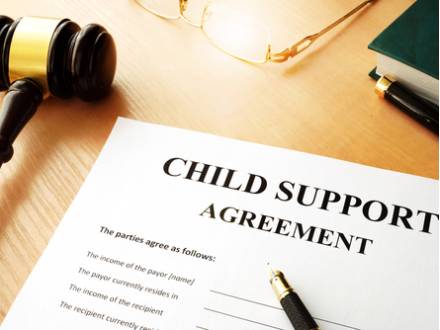 It is possible to get retroactive child support in Illinois. However, how far back it can go depends on your situation. Illinois courts handle retroactive child support differently depending on whether parents were married, whether a child support order already exists, and when the case was filed.
A DuPage County, IL child support attorney can help you understand what applies to your circumstances and how to pursue what you're owed in 2026.
When Does Illinois Allow Retroactive Child Support?
In most cases, a new child support order can be made retroactive to the date the case was filed. If not, the date the other parent was served with papers may be used. Going back to a period before the case was filed is only possible in certain situations.
For parents who were married and are now divorcing, child support is typically set from the date of filing. The court generally will not order support for a period before the case was filed.
Who Doesn't Qualify for Alimony in Illinois?
 The purpose of alimony, or spousal maintenance, is to help a lower-earning spouse maintain financial stability while they adjust post-divorce. It isn’t ordered in every Illinois divorce. Courts will go through a set process to determine whether alimony is needed and, if so, how long it will be paid. If a person already has the resources to support themselves when a divorce ends, they are less likely to receive maintenance.
A Villa Park, IL divorce attorney can help clarify whether spousal maintenance is likely to be ordered in your 2026 case.
Who Doesn't Qualify for Spousal Maintenance Under Illinois Law?
According to 750 ILCS 5/504, courts must assess each case based on certain factors to determine whether maintenance is appropriate. Not everyone will qualify.
Will I Have to Take a Parenting Class in My Illinois Divorce?
 If you're divorcing in Illinois and you share minor children with your spouse, you’ll probably have to take parenting classes before your divorce can be finalized. Illinois courts usually require divorcing parents to complete a parental education program before letting them settle issues about child custody, called parenting time and parental responsibilities.
A Plainfield family law attorney can explain how parenting classes in Will County work and help you complete the program without slowing down your case.
Why Do Illinois Courts Require Parenting Classes in Divorce Cases?
Illinois courts can and usually do order parents in dissolution cases to attend an educational program. This comes from state law 750 ILCS 5/404.1, although Illinois Supreme Court Rule 924 also applies and goes further.
Will I Maintain Joint Custody of My Kids If I Move?
 Relocating after a divorce or separation often has direct impacts on your custody arrangement. This makes logical sense, but parental relocation is also a significant legal event in Illinois. Whether your joint custody agreement stays intact after a move depends on how far you're going, what your current parenting plan says, and whether the other parent agrees. Getting the logistics wrong can expose you to serious legal consequences, including being ordered to return.
If you're planning a move in 2026 and share custody of your children, an Oswego, IL child custody attorney can help you understand what Illinois law mandates.
Does Illinois Require You to Get Court Permission Before Moving If You Have Joint Custody?
According to 750 ILCS 5/609.2, whether you need court approval to move depends on how far you're going from where your child primarily lives.
How Can I Account for My Spouse's Intangible Assets in Our Illinois Divorce?
 Not all assets in a divorce show up on a bank statement. This is even more likely to happen in high-asset divorces. For a fair division of property, the worth of all assets the couple owns must be fully disclosed. For high-net-worth divorces, this may require expert evaluation of assets and, in some cases, financial professionals who can make certain that all relevant assets have been addressed.
If you're worried your spouse's intangible assets might not be on the court’s radar in your 2026 divorce proceedings, our Lockport, IL, property division attorneys can walk you through your options and make sure nothing goes unaddressed.
What Counts as an Intangible Asset in an Illinois Divorce?
Intangible assets are things that have financial value but no physical form. They’re often not tied to any specific account. This can make it very difficult for the average person to understand their value.

Ready to Get Started?
Send us a message or call 630-785-2400 to arrange your complimentary case review.



From our offices in Lombard and Plainfield, The Law Offices of Robert F. Kramer, Ltd. represents individuals and families throughout the area, including but not limited to DuPage County, Will County, Kendall County, Addison, Aurora, Bloomingdale, Bolingbrook, Burr Ridge, Downers Grove, Glendale Heights, Glen Ellyn, Hinsdale, Lockport, Naperville, Oak Brook, Oswego, Romeoville, Villa Park, and Wheaton.
Results listed are not a guarantee or indication of future case results.
123 W. St. Charles Road, Suite #101, Lombard, IL 60148
630-785-2400

